
Using Contradictions to Create Masterful Microtension – Part 1
I can’t say this enough: masterful microtension in fiction, on every page, is what turns a good novel (or short story) into a great one. I’ve been posting and teaching on this topic for a number of years, and I’m always puzzled by the dearth of content online about microtension. How can something so crucial to fiction writing be so absent from the bulk of books, podcast episodes, blog posts, and online courses?
I’ve written enough about what microtension is (search my blog for those), but to put it simply: it’s tension at the word and phrase level. Microtension is conveyed, generally, in these six focuses (and which may be combined in various ways):
- Theme/Motif/Object/Symbol/repeated word
- Dialogue
- Emotions
- Mood/Setting/Descriptions
- Lyricism/Literary Devices
- Creative words
I’ll expand on all those in future posts, but in this post I want to emphasize how contradictions are at the heart of microtension. When we encounter words, phrases, or imagery that makes us perk up and pay attention, that’s microtension. I call these bits “sticky,” as they stand out and stick in your mind. You get snagged on them because they’re unexpected.
One of the most powerful—and underused—ways to generate microtension is through contradiction. When what is clashes with what should be, when beauty collides with dread, or when language itself pulls in opposite directions, the reader’s imagination is awakened. Contradictions destabilize certainty, and uncertainty creates tension (which is a good thing).
In this post, I want to focus on a few practical ways to craft contradictions that create microtension in fiction, particularly at the scene level. Rather than trying to apply every possible technique at once, let’s look closely at how setting and description, word choice, and a lightly woven motif or thematic echo can work together to deepen tension.
These elements are subtle, but when clustered intentionally, they do heavy lifting—often without the reader consciously noticing why a scene feels so charged.
Why Contradictions Work
At its core, story is about change—and change is born from opposition. Every meaningful narrative movement arises because something doesn’t line up: desire versus obstacle, belief versus reality, hope versus fear. Microtension is simply this principle operating at a smaller scale.
Contradictions keep readers alert because they suggest that the surface meaning of a scene is incomplete. If a setting is tranquil but the character feels unsettled, readers sense that tranquility won’t last. If the language is lush but the emotion is raw or ugly, we intuit that something is about to fracture. Contradictions create friction, and friction generates heat.
Pay attention to that!
Setting as Emotional Counterpoint
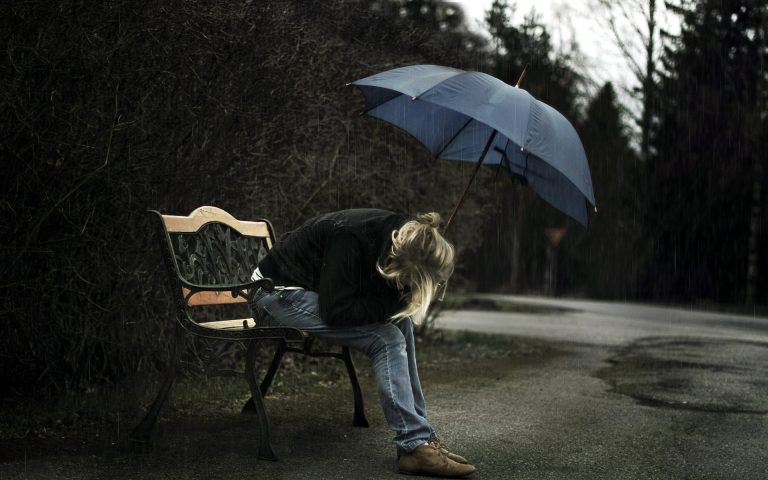
One of the most effective places to embed contradiction is in setting and description. Too often, writers default to harmony: a sad character in a gloomy place, a joyful character in a sunlit field. While this can work, it rarely surprises or piques a reader’s curiosity.
Microtension sharpens when the setting either mirrors the character’s internal state too perfectly—almost mockingly—or directly contradicts it.
 Instead of defaulting to harmony, it helps to pause and interrogate the relationship between environment and emotion. Consider whether the setting reflects what the character feels or quietly challenges it. Ask whether there is beauty the character cannot accept, comfort they resent, or order that feels suffocating rather than soothing.
When a serene setting is paired with inner turmoil, readers instinctively sense that the calm is fragile. They may not articulate the question, but they feel it: Why does this place make things worse rather than better? That unease alone pulls them deeper into the scene.
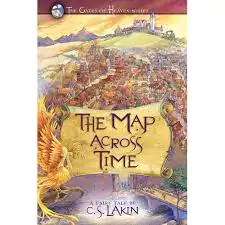
In the excerpt below from my fantasy novel The Map across Time, the king has just lost his wife, who had slowly and agonizingly died despite all attempts to heal her. Unable to bear the grief at the empty dining table, he rushes outside. The courtyard, which was her peaceful sanctuary, is not merely beautiful—it is overwhelmingly, almost aggressively so. The setting does not soothe the king; it destroys him.
He threw down the napkin and stormed out the door. Servants backed quickly out of his way, dropping to their knees as he strode across room after room until he reached the library doors. Flinging them open he stood like a drowning man gasping for air, on the threshold of the courtyard. A slight breeze cooled his neck and forehead. He composed himself, straightened his clothing, and ran a sweaty hand through his matted hair. He knew he smelled rank. He had lost count of the days since he’d taken a proper bath.
Across the yard, the spring in the fountain bubbled softly. The orchard bloomed profusely with snowy bunches of flowers, giving off a thick perfume. There was something about the perfect beauty of the courtyard—the planters overflowing with hyacinth and narcissus; the sprawling, manicured lawn of deep green that flowed down the hill like a carpet; the fruit trees in their neat little rows, trimmed and bursting with life—that broke him utterly. The king fell to his knees and wept.
The contradiction is immediate and layered. His body is unclean while the courtyard is immaculate. He feels like he is drowning even as the fountain bubbles gently nearby. He is unraveling in a world that appears perfectly ordered. The setting doesn’t simply exist—it actively participates in the character’s collapse. The more beautiful the courtyard becomes, the more unbearable it feels, until its perfection itself becomes the force that breaks him. The more beautiful it is, the more unbearable it becomes.
Word Choice: Letting Language Pull in Opposite Directions
Contradiction isn’t only structural; it can live at the sentence level through deliberate word choice.
The prose reinforces this effect through opposing textures. Words such as rank, matted, and sweaty clash sharply with snowy, perfumed, and manicured. Violent, abrupt verbs like stormed, flinging, and gasping collide with the gentler rhythms of bubbled softly and bloomed profusely. Because the language itself refuses to settle into a single emotional register, it mirrors the king’s instability and keeps the reader suspended in unease.
One practical way to apply this at the line level is to distill your scene into a single dominant word—such as control, loss, hope, or desire. From there, brainstorm words and phrases that reinforce that emotional core, then search for words that oppose it.
When both sets of language appear together on the page, the prose resists emotional certainty. The reader feels the instability before they consciously recognize it, which is exactly where microtension thrives.
Weaving a Motif through Contradiction
Motifs are especially powerful when they carry inherent contradiction. Water, for example, can cleanse or drown. Light can reveal or expose. Order can protect or imprison.
In the excerpt, water appears in opposing forms that quietly reinforce this tension. The King stands on the threshold feeling like a drowning man, overwhelmed and desperate for air, while just beyond him the fountain bubbles softly in an image of calm containment. The motif echoes without resolving, suggesting both loss of control and the illusion of serenity. Rather than easing the moment, the repetition tightens it.
When working with motif, it helps to identify the core idea the image or element represents, then explore how it might embody both promise and threat. Reintroducing that motif in altered emotional contexts allows it to accrue meaning without explanation. Rather than resolving tension, the motif deepens it, reminding the reader that the story’s central questions are still very much alive.
Reintroduce it in altered emotional contexts. Motifs gain power not through repetition alone but through variation and opposition.
During revision, it’s worth looking closely at moments that feel emotionally consistent or too neatly aligned. These are often opportunities for contradiction. Consider where the setting might resist the character rather than align with them, where a beautiful detail could become unbearable, or where something ugly or uncomfortable might offer an unexpected sense of relief. These small adjustments can transform a flat scene into one that quietly hums with tension.
Final Thoughts
Microtension doesn’t require explosions, arguments, or plot twists. It requires instability. Contradictions create that instability by refusing to let any moment settle into simplicity.
When setting, word choice, and motif all pull slightly against one another, scenes breathe—and strain—at the same time. The reader may not consciously identify the technique, but they will feel its effect.
And that feeling—the sense that something is off, unresolved, or about to break—is what masterful microtension looks like.
Featured Photo by Rob Wingate on Unsplash