
Using Contradictions to Create Masterful Microtension – Part 4
When writers think about tension in action, they often focus on movement—what physically happens in a scene. That can create great story tension. But action can greatly benefit by adding microtension to specific moments in scenes.
What creates microtension is the internal experience of the POV character as action unfolds, stalls, or betrays them. The most compelling scenes are often not driven by explosive events but by moments when characters act in opposition to what they feel, know, or desperately want.
Microtension emerges when the body moves forward while the mind resists, hesitates, or recoils. A character may comply outwardly while screaming inwardly. They may follow habit when instinct demands intervention. In these moments, tension accrues not because something dramatic is happening but because something essential is failing to happen.
How many times have you told yourself to do something now and yet you hold back for some reason? Or the opposite: act when you are screaming inside to stop what you’re doing? I can attest I’ve experienced both many times. This harkens to the inner conflict we looked at in the previous post, but in this post we’re adding in the decision to act or refrain from acting.
Action is never neutral on the page. Even the smallest movements—sitting down, glancing away, checking the time—carry emotional weight depending on when they occur and what the character understands at that moment. When action aligns cleanly with desire, scenes often feel smooth and efficient.
When action contradicts inner knowledge or emotion, narrative friction builds, tightening the scene with every second that passes. This can also be done masterfully with bits of contradictory body movements (which are action also). When we show a character smiling while talking to her spouse but her teeth and fists are clenched, the incongruity creates that desired microtension.
Create Friction by Foreshadowing
One of the most effective ways to create this friction is by choosing actions that subtly foreshadow darker outcomes. These need not be dangerous or dramatic acts. Often they are ordinary, even comforting behaviors that occur at precisely the wrong time. Distraction replaces urgency. Routine overrides intuition. The character delays when speed matters most. The reader senses the wrongness of the moment even if the character does not, and that imbalance generates tension.
This effect is magnified when action is consistently paired with emotional context. Action without interior response feels flat. Interior response without action can feel static. Together, they create pressure. The writer’s task is not merely to show what the character does but how the character feels about doing it, about the fact that it is happening now, and about what it might mean if the moment passes unchanged.
Often, microtension arises when characters criticize themselves before acting, rationalize delay, latch onto irrelevant details, or feel pride or comfort where alarm should exist.
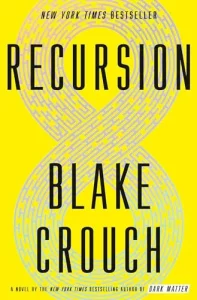
A devastating example of contradiction between action and inner experience appears in Recursion by Blake Crouch. In this scene, the POV character Barry has been sent back in time to prevent his daughter from being hit by a car and killed. After “dying” in a bizarre machine, he begins to feel he’s inside his younger body and has become his younger self, all the while knowing all of his life to date. This moment occurs partway through the scene as Barry adjusts to his new reality. His actions are in severe opposition to what he feels, creating intense tension and microtension with every second that passes as he fails to act. Here is a piece of this moment:
He wants out of his memory, but he can’t leave. All senses are fully engaged. Everything as clear and vivid as existence. Except he has no control. He can do nothing but stare through the eyes of his eleven-years younger self and listen to the last conversation he ever had with his daughter, feeling the vibration of his larynx, and then the movement of his mouth and lips forming words.
“You talked to Mom about this?” His voice doesn’t sound strange at all. It feels and sounds exactly the way it does when he speaks.
“No, I came to you.”
“Is your homework done?”
“No, that’s why I want to go.”
Barry feels his younger self leaning to see around Meghan as Todd Helton gets a piece of the next pitch. The third-base runner scores, but it’s a groundout for Helton.
“Dad, you’re not even listening to me.”
“I am listening to you.”
Now he’s looking at her again.
“Mindy is my lab partner, and we have this thing due next Wednesday.”
“For what?”
“Biology.”
“Who else is going to be there?”
“Oh my God, it’s me, Mindy, maybe Jacob, definitely Kevin and Sarah.”
Now he watches himself lift his left arm to glance at his watch—one he will lose when he moves out of this house ten months from now in the wake of Meghan’s death and the explosive decompression of his marriage.
It’s a hair past 8:30 p.m.
“So can I go?”
Say no.
Younger Barry watches the next Rockies player walking to the plate.
Say no!
“You’ll be back no later than ten?”
“Eleven.”
“Eleven is for weekends, you know that.”
“Ten thirty.”
“OK, forget it.”
“Fine, ten fifteen.”
“Are you kidding me with this?”
“It takes ten minutes to walk there. Unless you want to drive me.” Wow. He had repressed this moment because it was too painful. She had suggested he drive her, and he had refused. If he had, she would still be alive.
Yes! Drive her! Drive her, you idiot!
“Honey, I’m watching the game.”
“So ten thirty then?”
He feels his lips curling up in a smile, remembers acutely the long-lost feeling of losing a negotiation with his daughter. The annoyance, but also the pride that he was raising a woman of grit, who knew her own mind and fought for the things she wanted. Remembered hoping she would carry that fire into her adult life.
“Fine.” Meghan starts for the door. “But not a minute later. I have your word?”
Stop her.
Stop her!
“Yes, Dad.” Her last words. Now he remembers. Yes, Dad.
Barry’s younger self is staring at the television again, watching Brad Hawpe rifle a ball straight up the middle. He can hear Meghan’s footsteps moving away from him, and he’s screaming inside, but nothing’s happening. It’s as if he’s inhabiting a body over which he exerts no control.
His younger self isn’t even watching Meghan as she moves toward the door. Only cares about the game, and he doesn’t know he just looked into his daughter’s eyes for the last time, that he could stop this from happening with a word.
He hears the front door open and slam shut.
Then she’s gone, walking away from her house, from him, to her death. And he’s sitting in a recliner watching a baseball game.
What makes this scene devastating is not surprise but contradiction layered upon contradiction. Barry knows exactly what this moment means. He knows how fragile it is. And yet his actions—watching the game, negotiating curfews, smiling with pride—actively contradict that knowledge. His body behaves as it always has. His mind screams for intervention. The microtension lives second by second in that widening gap.
Crouch heightens microtension by clustering alternative outcomes that never occur. Barry can say no. He can drive her. He can stop her at the door. Each option is visible, reachable, and emotionally charged. Every second that passes without action becomes an act of violence against the inevitable future Barry is trying to prevent.
The ordinariness of the actions intensifies the dread. Sitting in a recliner. Watching baseball. Smiling at a child. These are not dangerous acts—but in this context, they are catastrophic. The reader senses the wrongness long before the door closes. By the time it does, the damage is already complete. However, Barry finally musters control over his actions and acts—preventing the tragedy at the last second.
This is the power of contradiction in action. Inaction becomes action. Habit becomes fate. The scene hurts not because something explodes but because nothing changes.
When writers deliberately craft scenes in which action contradicts inner experience, they invite the reader into a space of anticipation and dread. We feel tension not because we don’t know what will happen but because we know exactly what could happen—and watch it slip away.
Contradictions in action create microtension when characters act against their own knowledge, delay when urgency matters, or find comfort in choices that will later destroy them. Can you come up with important moments in your story to use contradictions in action to create microtension?
Featured Photo by Mitchell Orr on Unsplash