

Using Contradictions to Create Microtension – Part 5
We’ve been looking at how to craft powerful mictotension (a must in fiction!) in these last few posts. In this post, we’ll briefly examine how to add it to backstory. Contrary to what some may say, backstory is not evil. Yes, writers are warned against excessive use of backstory, but without some backstory, most stories will fall flat or leave readers puzzled.
There are many masterful ways to handle backstory in fiction, and what’s usually recommended (and I agree) is to avoid interrupting the present action of a scene with long passages of a character reflecting on some past event (in order to explain context to the reader). Often just a few brief paragraphs, if needed, will do the trick in helping readers understand a situation.
While the most powerful backstory moments are often dramatized as full scenes, many stories rely on brief summaries embedded within present action. For full “replays” of the past, a writer can use any of the many backstory tools we’ve been looking at, just as with a present action scene.
But let’s consider those brief summaries of backstory that are often needed in a scene. These moments benefit from precision—careful word choice, repetition, and motif/symbolism that connect the memory with the character’s current emotional state. When done well, even a short paragraph of backstory can resonate deeply and reinforce the scene’s tension.
To create great microtension, consider the parallels and contrasts of the past with the present. Characters who feel nothing about their past generate no friction. Characters who are conflicted by it—who regret, long for, resent, romanticize, or misremember it—carry tension into the present moment.
 Microtension in backstory comes from contradiction. A character is never simply remembering. They are remembering from a different emotional state, a different level of knowledge, a different set of losses. The past is filtered through the present, and when those two perspectives don’t align, tension arises. The reader senses the gap between who the character was and who they are now, between what once seemed possible and what is now irrevocably closed.
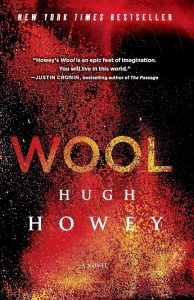
A good example of this appears in Hugh Howey’s novel Wool, where a fleeting memory reveals the emotional core driving Holston’s desire to end his life. The passage is brief, but it carries enormous weight because it is not neutral recollection—it is memory sharpened by loss. The opening scene shows Sheriff Holston climbing the silo’s metal stairs to the top floor, where he plans to end his life. We learn through bits of backstory what has led him to this moment:
A child, ejected from the group like a comet, bumped into Holston’s knees. He looked down and moved to touch the kid—Susan’s boy—but just like a comet, the child was gone again, pulled squealing back into the orbit of the others.
Holston thought of the lottery he and Allison had won the year of her death. He still had the ticket; he carried it everywhere. One of these kids—maybe he or she would be two by now and tottering after the older children—could’ve been theirs. They had dreamed, like all parents do, of the double fortune of twins. They had tried, of course. Night after glorious night of attempting to redeem that ticket, other parents wishing them luck, other lottery hopefuls silently praying for an empty year to pass.
He and Allison looked for anything to help. Tricks like hanging garlic over the bed that supposedly increased fertility, two dimes under the mattress for twins, a pink ribbon in Allison’s hair, smudges of blue dye under Holston’s eyes—all of it ridiculous and desperate and fun. The only thing crazier would have been to not try everything, to leave some silly séance or tale untested.
But it wasn’t to be. Before their year was even out, the lottery had passed to another couple. It hadn’t been for a lack of trying; it had been a lack of time. A sudden lack of wife.
What makes this passage so effective is not the information it conveys but the way it is framed emotionally. The memory is triggered by a present sensory detail—a child colliding with Holston’s knees—and immediately becomes personal and painful. The contrast between what might have been and what is sharpens the reader’s understanding of Holston’s despair.
Notice how the repetition of the word lack does more than describe infertility. It echoes outward. At first, the lack is biological. Then it becomes temporal—a lack of time. Finally, devastatingly, it resolves into a lack of wife. In a few spare lines, the backstory collapses multiple losses into a single emotional truth. The repetition doesn’t explain Holston’s grief; it magnifies it.
This is microtension at work in summarized backstory. The memory reinforces the character’s present state of mind, and no doubt amplifies it. The past is not safely contained; it intrudes. It clarifies why the present feels unbearable. Readers don’t just learn what happened; they feel how the burden of that past.
Crucially, the tone of the memory contrasts with the tone of the present. The rituals Holston recalls were once hopeful, even joyful—“ridiculous and desperate and fun.” In the present, those same efforts are stripped of innocence. Time has altered their meaning. That emotional shift creates friction between past and present selves, deepening the scene’s impact without stalling the narrative.
When writers think of adding backstory, it’s useful to distill the past event into a phrase—a wound, a flaw, a desire—and then explore contradictory words. What once felt hopeful may now feel cruel. What once felt insignificant may now feel defining. By allowing the present-day character to be at odds with their past perspective, even briefly, the story gains depth and resonance.
Microtension in backstory doesn’t require long passages or elaborate flashbacks. Often, it’s enough to let the character remember from a place of altered understanding. The past stays the same. The meaning does not. Microtension can be used in those moments to drive home that shift in your character.
Featured Photo by Immo Wegmann on Unsplash