
Tips to Bookend Your Novel – Part 1
Have you ever finished a novel and thought, Wow. That ending was perfect?
Sometimes we can’t even articulate exactly why an ending feels so satisfying. We just know it does. The story seems to have come full circle. Something in those final pages makes us think back to the beginning, and suddenly we realize the author has been setting up that ending all along.
One way to create that satisfying sense of completion is to bookend your novel.
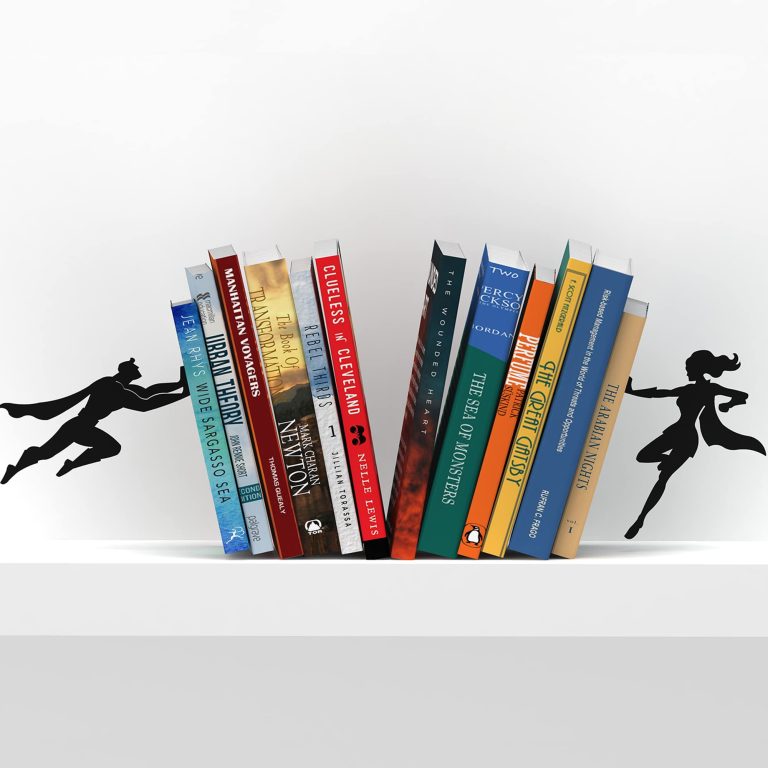
You may (or may not) have heard of the term “bookending.” Just imagine actual bookends on a shelf, one on the left, the other on the right. The two bookends “hold” all the books together as a unit.
So with a novel, bookending involves intentionally connecting your opening and closing scenes so they echo each other in some way. You might return to the same setting; repeat an object, image, or line of dialogue; revisit a situation under completely different circumstances; or bring a key theme or phrase from the beginning back at the end.
The possibilities are almost endless.
And when done well, the technique is subtle enough that readers may not consciously notice what you’ve done. They simply experience that wonderful feeling of completion.
Your Opening Makes a Promise
I’ve written often about the importance of your opening scene because those first pages have a tremendous amount of work to do.
Your opening scene needs to introduce us to your protagonist and her current world. It should give us some sense of what she wants, what matters to her, what she believes about herself or the world, and what kind of story we’re about to read. It establishes tone and genre and, ideally, hints at the central problem or thematic question that will be explored throughout the novel.
In other words, your opening makes a promise.
Your ending needs to fulfill that promise.
That doesn’t mean you need to repeat everything from your opening scene. Quite the opposite. Your protagonist should have gone somewhere during the course of the story. She may have changed dramatically, or she may have stubbornly refused to change and suffered the consequences. Either way, the ending should allow us to see the result of the journey we’ve just taken with her.
This is why it can be so powerful to echo something from the beginning.
The external circumstances might look remarkably similar, but the character’s internal state has changed completely.
An Echo, Not a Copy
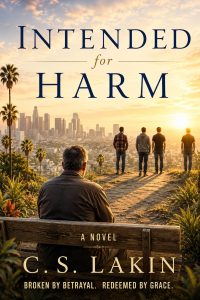 When I talk about bookending, I don’t mean that you should simply reproduce your opening scene at the end of your novel. The ending needs to be different because your character—and your story—have changed. Think of it as an echo rather than a copy.
Another important point: you don’t have to limit yourself to using this echo technique in only the last scene. In my novel Intended for Harm, I have an extensive section (a half-page) in the chapter prior to the ending that is verbatim—every word—of the prologue. Yet those direct thoughts in the opening are Jake’s (the father, as he carves a wooden sculpture), and the ones in the later chapter are his son Joseph’s (as he is about to perform surgery on his brother). One holds a carving tool, the other a scalpel. Also, the very first line of the novel (“The highway of holiness is a toll road”) ends that repeated section:
A glint of light catches on the metal’s edge as he turns the lightweight blade in his hand. He squints, pauses. Underlying his thoughts, machines whirr and hum, stirring like dormant creatures waking after a winter slumber—reflective of his buried emotions, so long ignored, feelings so disconnected they too rumble incoherently.
His sense of hearing is unusually heightened. The room pulses and takes on a life of its own; a clock ticking becomes a rhythmic heartbeat, causing surges of perspiration to trickle down the sides of his neck, soaking the cotton shirt as he stands, hesitates, holds the object up to study its smooth surface, finely polished, noticeably sharp.
He’d never before considered how small and innocuous this thing felt in the palm of his hand. Yet so capable of slicing through flesh with precision, severing blood vessels, separating muscles from bone, tissue from tendons, all with the slight pressure one might use in peeling an apple.
Hardly innocuous, though. For, even a surgeon’s scalpel must tear open flesh and draw blood before it can do a healing work.
Pain precedes healing. This truth has taken a lifetime to learn.
The Great Physician cannot heal until the incision is made and what is putrid and pustulant collides with air and water until thoroughly cleansed. There is a wash of relief that follows such ablution, and the soul thus rid of a lifetime’s burden of contamination becomes keenly aware of a glorious sense of freedom.
He can taste it; he is that close.
A glance at the clock tells him it is almost time. Soon will come the culmination of his story, the point to which all the variant, divergent paths of his life have unknowingly led him. All the hurtful, agonizing moments he thought were intended for harm God actually intended for good, for the saving of life.
The last lines of the novel are the exact last lines of the prologue:
It is time.
His sojourn through the wilderness is over. He turns his head toward the door. Tears fill the pools of his eyes, but through the distortion of his watery lenses he can make out the distinctive shape approaching him, carried on a bier of jubilant voices. A mirage materializing in the heat waves of time.
Joseph, my Joseph . . .
You can be creative with this echoing technique to great effect. Your reader will feel the echo, and it will work like an anchor for the story.
Bookend with a Setting
One of the simplest ways to bookend a novel is to return your character to the same physical location. When your character returns there at the end, the setting itself becomes a measuring stick for the character’s transformation.
The place hasn’t necessarily changed; the character has. A great example of this is found in The Kite Runner, when the protagonist, years later, returns to Afghanistan, his home, to find it (and he himself) fundamentally changed.
This can be especially effective when the opening and closing scenes contain similar circumstances. Put your protagonist in roughly the same physical situation and let us see how differently she responds. Think about crafting a thought, a line of dialogue, a meaningful item that can be repeated with purpose.
Bookend with an Object or Motif
Whether you return to the same setting or not, you can bring in a motif—a recurring object, image, phrase, sound, or symbol.
Let’s say your protagonist wears her mother’s old watch throughout the novel. In the opening, she constantly checks it because she’s obsessed with time and feels she is running out of it. By the ending, the watch may appear again, but its meaning has changed. Maybe she gives it to her daughter. Maybe she finally takes it off. Maybe she simply looks at it and realizes she no longer needs it to measure her worth.
The object hasn’t necessarily changed. What it means has changed. That’s the important distinction.
A motif becomes powerful when its meaning accumulates throughout the novel. Each time you bring it back, readers associate it with something more. Then, when it appears in the final scene, it carries all those associations. (To learn some masterful techniques with motifs, check out my book Masterful Microtension).
Look for something concrete that can carry an abstract idea.
You Can Echo a Line
Another wonderful way to bookend a novel is to repeat a line of dialogue or narration (as I showed in my example from Intended for Harm—which emphasizes how the exact words can mean something completely different by the time the reader reaches the end).
Consider Isabel Allende’s The House of the Spirits. The novel begins with the sentence, “Barrabás came to us by the sea,” attributed to Clara’s writing. The last line (“It begins like this: Barrabás came to us by the sea) circles back to that same declaration, making the novel feel like the completion of the act of recording the family’s story.
The repetition isn’t merely a clever trick. It connects the beginning and ending through the family’s history, Clara’s notebooks, Alba’s role in preserving that history, and the novel’s larger meditation on memory and time.
 Another terrific novel that uses a phrase to bookend the story and pack it with theme is Leif Enger’s Peace like a River. Early in the book, adult Reuben shares some of the miracles his father performed with the caveat, “Make of that what you will.” He then seals the entire narrative arc by bringing the exact phrase back in the novel’s very final paragraph.
Reuben recounts how his father commanded him to breathe after he was born dead and went without oxygen for twelve minutes, bringing him back to life. Knowing that modern, pragmatic readers will greet such a claim with skepticism, Reuben addresses the audience directly. By telling us to “make of that what you will,” he invites the reader to participate in the story.
At the climax of the book, after enduring an afterlife-like vision, a dramatic showdown, and the ultimate sacrifice of his father, Reuben’s severe asthma is permanently, miraculously cured.
Here we see not only the repetition of a phrase and its intent, but also the return to Reuben’s initial account of the miracle his father performed on him at his birth.
Bookending is a powerful tool, and just about any story can benefit from this technique. There is so much more to this topic, so watch for the next posts, which will provide more examples for you to learn from!
What are your thoughts? Have you ever crafted a bookend structure for your story? Have you read one in a novel that had a strong impact on you? Share in the comments.
Banner image: Artwork: Frederick the Literate by Charles Wysocki. Puzzle available here.