Tips to Bookend Your Novel – Part 2
In our first post on bookending, we looked at some ways you can strengthen your novel with this special technique. Bookending involves repeating some element(s) from your opening scene, whether a prologue or first chapter, and there are many elements you might choose from.
In this post, we’ll continue looking at examples of effective bookends to help you think creatively about ways you might insert something similar in your story. One great thing about this technique—which can work within any genre—is you can add and reinforce it late in the writing stage.
Sure, planning from the outset to develop your themes and motifs so that you can use them to bookend is a smart strategy. But even if you’ve completed your draft, you can consider the best elements for this technique. Now that your draft is finished, you have well in hand your themes, character arc, important moments and insights your character experiences. That will give you a deep well of ideas to draw from to create your bookends.
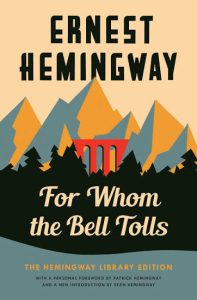 Ernest Hemingway’s For Whom the Bell Tolls provides another great bookend example—this one a “positional” echo.
The novel opens with Robert Jordan lying on the forest floor: “He lay flat on the brown, pine-needled floor of the forest …”
Jordan is on a military mission, observing the terrain and preparing for the work he has been sent to do. Near the end of the novel, after the bridge is destroyed and Jordan is badly injured, he finds himself lying on that forest floor again.
But now everything is different. He knows he cannot escape with the others, and he stays behind to give them time to get away.
The physical image has come full circle, but Jordan has been transformed by everything that has happened. It makes the ending feel complete (and, if you’re a Lost fan like me, you may recall how the series opens with Jack lying on the forest floor after having “fallen” out of the airplane, looking up through the canopy of leaves … which is the same place and posture he is in at the end of his life—not quite the last scene in the series—bringing the whole lengthy series full circle).
Bookend with Your Theme
You can also bookend your novel by bringing your central theme back into the final scene.
Perhaps your novel explores freedom. The protagonist may begin the story feeling trapped—by a marriage, a family expectation, a belief about herself, or something she has done in the past. Your opening might show that confinement without ever announcing, This is a story about freedom. By the end, you can create a scene that visually or emotionally reverses that opening.
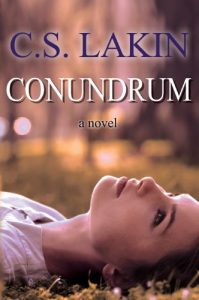 This is what I did in my novel Conundrum. I end the book in the last lines drawing from lines and themes from the beginning.
The novel opens with my protagonist, Lisa, thinking about a conundrum (a mental puzzle that is solved by asking yes-or-no- questions): a mysterious man is sitting in a restaurant, he orders albatross, and then when he takes a bite, he says: “Thank God, I’m free.”
That opening “conundrum” becomes a thematic thread throughout the novel. The man’s search for answers and his longing for freedom become symbolic of Lisa’s own journey.
This is how the novel ends:
I looked at Jeremy, the only man I had ever loved, oh so loved, and my heart soared like a helium-filled balloon escaping into the sky. I thought of the man in the restaurant—the man who had spent the better part of his life looking for answers. Looking for truth.
Then she hears the words again: “I’m free,” he said. And Lisa mouths the words along with him.
I also grab the exact phrase—”Jeremy, the only man I had ever loved, oh so loved”—from the opening scene (used only twice), to create an echo (perhaps only subconsciously familiar to the reader) and layer the bookending effect.
The ending deliberately reaches back to the beginning, but now the meaning has shifted. The man’s declaration of freedom has become Lisa’s declaration, too.
Consider Your Title
Titles are so important, and they can be powerful in cementing your theme. It may be that after you have written your draft and finally understand the breadth of your story’s themes that you can craft the perfect title. I usually work the other way—start with a theme and title and build my story around it.
Either way, consider not only weaving your title and its associated theme(s) into your story but also using it as a bookend. Obviously, my choice of the title Conundrum was purposeful in that regard. Also Intended for Harm, as a title, implies my overarching theme of that novel: that what my characters interpret as harmful intent by others and by God turns out to be for their good, which is the lesson driven home in the Bible’s Genesis story of Jacob and Joseph, of which my novel is a modern allegory.
If your title has a strong thematic meaning, look for a natural way to bring that phrase, concept, or image into your first and final pages.
Your title might appear in a line of dialogue at the beginning and return at the end. It might be represented by an object or image. Or the protagonist may come to understand what the title means only after everything he’s experienced.
This can be particularly satisfying because readers have been carrying that title in their minds throughout the entire book. When the ending gives it greater significance, the title itself clicks into place.
You don’t want to force this. If the title is simply a catchy phrase with no deeper connection to the story, don’t shoehorn it into your final paragraph and hope it works.
Bookending vs. a Frame Structure
There’s another storytelling technique that can sound similar to bookending but is actually quite different: frame structure. This term is used frequently in screenwriting to describe a story that opens with a brief glimpse of a later, often climactic, moment.
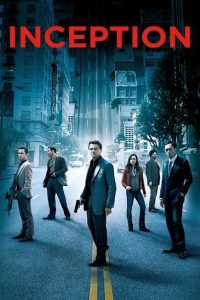 For example, we see the protagonist in the middle of a tense situation, but we don’t yet know how she got there or what is about to happen. Then the story jumps back in time and begins earlier, eventually catching up to that opening moment. A great example is the movie Inception.
Inception opens with a mysterious scene that actually occurs much later in the story. We see the protagonist, Cobb, being pulled from the water and brought to an elderly Saito before, but we don’t yet know how Cobb got there or what happened between them. The film then jumps backward and begins telling the story that leads to that opening moment.
As the story unfolds, we learn about Cobb’s work, his relationship with Mal, and the job Saito hires him to perform. Eventually, the narrative catches up with the opening scene, but now we understand its significance.
The key distinction from bookending is that Inception’s opening isn’t primarily an echo of the ending—it’s a glimpse of the future. The frame creates the question: How did Cobb get here? The story then takes us backward to reveal the answer. Bookending, by contrast, connects the beginning and ending through an element that returns with new meaning.
So, a useful way to remember the difference is that a frame previews the story; a bookend reflects it. A frame uses chronology to create curiosity—How did we get here? A bookend uses repetition and transformation to create resonance—Look how far we’ve come.
I use the frame structure in my fantasy novel The Sands of Ethryn, book 6 in my Gates of Heaven series. Similar to the movie technique (which fiction writers can absolutely borrow), the prologue is a partial replaying of the climax scene. It only goes so far, though, setting the stage for the big, exciting moment but leaving out some key elements that are surprise reveals in the full scene. It’s a super fun structure to play around with, and it can thrill readers with the same feeling as a bookend.
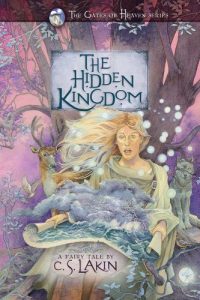 I do a similar structure in the final book in my fantasy series (book 7), The Hidden Kingdom. However, in this novel I have a story within a story. My protagonist is a mother telling the story of the hidden kingdom to her young son (think: The Princess Bride or The Neverending Story). While the opening and closing scenes show brief moments with this mother and son, the various sections of the novel are broken up with additional scenes, all centered on the bedtime story she is telling her son.
So, to reiterate: there are many ways you can utilize bookending in your story, whether a novel, short story, play, or script. We’ll explore a few more examples in our next post.
Any thoughts? Can you think of other great movies that use a bookending or frame structure technique?